How Security Guards Help Prevent Break-Ins at Commercial Properties
security services in Melbourne a commercial break-in can cause more than the immediate loss of stock, equipment or cash. Businesses may also have to deal with property damage, interrupted operations, compromised information and concerns about employee safety.
Security guards can form an important part of a commercial property’s security strategy by providing a visible presence, monitoring access points, conducting patrols and responding to suspicious activity. Their role is not simply to stand at an entrance. A properly planned security service can help identify vulnerabilities, discourage unauthorised access and provide a controlled response when an incident occurs.
For businesses considering security guards for commercial properties, the right approach depends on the site’s layout, operating hours, assets, previous incidents, staffing arrangements and existing security technology.
This article explains how guards can help reduce break-in risks and how businesses can combine physical security with alarms, CCTV, lighting and access controls.
Why Commercial Properties Can Be Vulnerable to Break-Ins
Commercial premises can present different security challenges depending on the type of business.
Warehouses may contain valuable stock and equipment. Retail stores can have accessible entrances and display areas. Offices may contain computers, documents and other sensitive assets. Construction sites can have materials, machinery and equipment stored outside normal operating hours.
Some properties also become significantly quieter at night, leaving fewer people available to notice suspicious activity.
Victoria Police recommends businesses take practical measures such as maintaining secure fences and gates, installing quality locks, providing suitable exterior lighting, using cameras and monitored alarm systems, and securing entry points.
Security guards can complement these measures by providing a human presence and actively monitoring the property.
How Security Guards Help Deter Break-Ins
One of the most visible benefits of an onsite guard is the presence of a person who is actively monitoring the property.
A potential intruder may see a guarded property as presenting a greater likelihood of detection than an unattended site. However, the level of deterrence depends on factors such as guard visibility, patrol arrangements, site layout and the overall security strategy.
A guard may be stationed at an entrance, patrol the perimeter or move between designated areas according to a site-specific security plan.
Visible security presence
Uniformed guards positioned at appropriate locations can make it clear that the property is actively monitored.
This can be particularly useful during:
- Overnight periods
- Business closures
- Shift changes
- Deliveries
- Opening and closing procedures
- High-risk periods identified through a site assessment
The objective is not simply visibility for its own sake. Guard deployment should be based on where and when the property has identifiable security risks.
Regular Patrols Can Identify Problems Early
Patrolling allows guards to physically inspect parts of the property that may otherwise receive little attention.
Depending on the site and agreed duties, patrols may include checking:
- Perimeter fencing
- Gates
- Doors
- Loading areas
- Storage areas
- Car parks
- Windows
- Restricted-access areas
- External equipment
- Areas identified as security vulnerabilities
A patrol can also identify conditions that could make a break-in easier, such as an unsecured gate, damaged fence or door that has not been properly closed.
Victoria Police specifically recommends businesses keep fences and gates well-built, maintained and secured, while also keeping boundaries clear of potential climbing aids.
A guard can incorporate these physical security checks into a broader patrol routine.
Access Control Helps Prevent Unauthorised Entry
Not every security incident begins with forced entry.
Unauthorised people may attempt to enter through an unlocked door, follow an employee through a controlled entrance or access an area where they do not have permission to be.
Security guards can help manage access by:
- Checking visitors
- Verifying access permissions
- Monitoring entry and exit points
- Directing visitors to reception
- Maintaining visitor records where required
- Restricting access to designated areas
- Monitoring deliveries and contractors according to site procedures
The exact responsibilities should be documented in the site’s security procedures.
For workplaces where aggression or violence is also a concern, WorkSafe Victoria identifies access controls, secure employee areas, visibility of people entering and exiting, CCTV and communication systems as potential risk controls.
Guards Can Monitor After-Hours Activity
Many commercial properties have substantially different security requirements outside normal business hours.
Once employees leave, a guard may be responsible for monitoring activity during a specified period and carrying out scheduled patrols.
This can be particularly relevant for:
- Warehouses
- Industrial facilities
- Construction sites
- Retail premises
- Office buildings
- Commercial complexes
- Vacant properties
An after-hours security plan can establish when patrols occur, which areas are checked, how incidents are documented and who should be contacted when an issue is identified.
The goal is to create a defined process rather than relying on an individual guard to make decisions without guidance.
Security Guards and CCTV Work Better Together
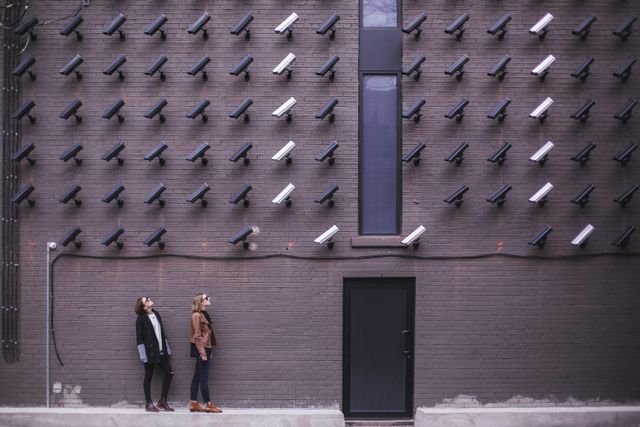
Security cameras can provide valuable visual information, but cameras do not physically investigate a suspicious situation.
A guard can monitor CCTV where that is part of the service and use information from cameras to direct attention towards a particular area.
For example, an unusual movement detected around a restricted entrance may prompt a guard to investigate according to the property’s procedures.
The combination can provide two different functions:
CCTV: Provides visual monitoring and recorded information.
Security guard: Provides physical presence, observation and an onsite response within the guard’s authorised role.
Victoria Police recommends businesses use cameras and monitored alarm systems as part of securing commercial premises.
What Happens When a Guard Finds Suspicious Activity?
The response should depend on the circumstances and the site’s documented procedures.
A guard may observe, communicate, report, secure an area or escalate the incident according to their training, authority and instructions.
For a suspected break-in, the priority should be safety and appropriate escalation rather than unnecessary confrontation.
Businesses should have clear procedures covering:
- Who the guard contacts.
- When police should be contacted.
- How employees are notified.
- How access to the affected area is controlled.
- How the incident is documented.
- How CCTV or other evidence is preserved.
If there is an immediate threat, crime in progress or danger to people, the appropriate emergency response should be followed.
Security guards do not replace police. Their role is generally to protect the site, identify and report incidents, and operate within the authority provided by law and their security assignment.
Security Guards Can Help With Opening and Closing Procedures
Opening and closing times can create particular security risks because employees may be arriving or leaving while the site transitions between occupied and unoccupied conditions.
A security service can be structured around these periods where the risk assessment supports it.
Potential duties can include checking designated areas, controlling access, monitoring unusual activity and confirming that agreed security procedures have been followed.
WorkSafe Victoria specifically identifies procedures for opening and closing businesses as part of managing risks associated with aggression and violence.
This can also be relevant to physical security because doors, gates, alarms and access systems may be changing status during these periods.
Choosing the Right Security Guard Service for a Commercial Property
Not every commercial property needs the same security arrangement.
Before hiring guards, consider:
Property layout
A large industrial site may need mobile patrols and perimeter checks, while a smaller office may require access control at specific times.
Operating hours
Determine whether security is required during business hours, overnight, weekends or only during particular periods.
Previous incidents
Previous break-ins, vandalism, theft or unauthorised access can help identify areas requiring greater attention.
Existing security technology
Review how guards will work with CCTV, alarms, access-control systems and lighting rather than treating each measure separately.
Staff and visitor activity
A busy retail property has different access requirements from a warehouse with controlled deliveries.
Risk assessment
The security plan should be based on the actual site and its risks rather than selecting a generic number of guards without considering the property’s characteristics.
Victorian Security Licensing Requirements
Businesses hiring security guards in Melbourne or elsewhere in Victoria should verify that the relevant personnel and security business are appropriately licensed.
Victoria Police regulates the private security industry in Victoria. Since 19 June 2025, private security activities have been licensed activities under changes to the Victorian private security framework. Victoria Police also provides a public register that businesses can use to check current private security licence and registration information.
This is particularly relevant when comparing commercial security providers. Businesses should check the licensing status applicable to the services being provided rather than relying only on a company’s marketing material.
Security Guards Are One Part of a Layered Security System
A guard should not necessarily be viewed as a replacement for physical security and technology.
A stronger approach can combine several layers:
- Secure doors and locks
- Fencing and gates
- Exterior lighting
- CCTV
- Monitored alarms
- Access control
- Security patrols
- Visitor management
- Staff procedures
- Incident reporting
Victoria Police recommends several of these physical and electronic measures for businesses, including lighting, secure boundaries, quality locks, cameras and monitored alarm systems.
WorkSafe Victoria also identifies onsite security, access controls, CCTV, alarms and other environmental controls as potential measures for managing workplace aggression and violence.
The appropriate combination depends on the site’s specific risks.
Common Mistakes to Avoid
Hiring guards without a site assessment
A generic security package may not address the property’s actual vulnerabilities.
Treating security guards as a replacement for technology
Guards and technology can perform different functions. CCTV, alarms and access systems can support a guard’s work.
Failing to define guard responsibilities
The contract should clearly describe patrol areas, access-control duties, reporting requirements and escalation procedures.
Ignoring physical security weaknesses
A guard should not be expected to compensate indefinitely for broken locks, damaged fencing or unsecured doors.
Focusing only on business hours
Break-in risks may change substantially after employees leave.
Choosing a provider without checking licensing
Businesses should verify the relevant Victorian licensing requirements and the provider’s current status.
Not reviewing incident reports
Security reports can reveal recurring issues and help businesses determine whether procedures or physical controls need to change.
Frequently Asked Questions
Do security guards actually prevent commercial break-ins?
Guards can contribute to preventing or deterring unauthorised entry through visible presence, patrols, access control and monitoring. They should be considered one part of a broader security strategy rather than a guarantee that a break-in cannot occur.
Are security guards better than CCTV for commercial properties?
They serve different purposes. CCTV provides visual monitoring and recorded footage, while guards can physically patrol the site and respond according to their authorised duties. Combining both may provide broader coverage.
Do commercial properties need security guards overnight?
Not necessarily. The appropriate arrangement depends on the property’s risk profile, operating hours, previous incidents, location, assets and existing security measures. A site assessment can help determine whether overnight guarding, mobile patrols or another arrangement is appropriate.
Can a security guard stop someone breaking into a business?
A guard can take actions within their lawful authority and the procedures of the security assignment, but security personnel are not a substitute for police. Businesses should have clear escalation procedures for suspected or actual criminal activity.
How do I check whether a security guard is licensed in Victoria?
Victoria Police provides a public register of current private security individual and business licence or registration holders. Businesses can use the register to check relevant licensing information.
What should a commercial security plan include?
It should reflect the property’s specific risks and may include access control, patrols, lighting, CCTV, alarms, secure boundaries, opening and closing procedures, incident reporting and escalation arrangements.
Final Thoughts
Security guards can play a valuable role in protecting commercial properties by creating a visible security presence, conducting patrols, controlling access and identifying suspicious activity.
The strongest approach is rarely based on one measure alone. Secure doors and gates, suitable lighting, CCTV, alarms, access controls and clear staff procedures can work alongside professional security personnel to create multiple layers of protection.
If your commercial property has experienced break-ins, vandalism or unauthorised access—or you want to review its security before an incident occurs—start with a site-specific risk assessment. From there, you can determine whether onsite guards, mobile patrols, access control or a combination of measures makes sense for the property.